

Eastern Orthodox Ancient Authoritive Theologians
As a protestant within the Reformed Church Tradition, I find that I and everyone around me are largely ignorant about Eastern Orthodoxy, and hardly know the differences between Eastern Orthodoxy and Roman Catholicism. If asked, most will reply the filioque, icon veneration, the Great Schism, episcopalian government without a pope, and lots of guys dressed like Darth Vader in Russia, and an emphasis on tradition over developing theological works.
I've been interested in Eastern Orthodoxy more recently after attending a Florovsky Society conference at Princeton, and intersted in Dumitru Staniloae in particular after a lecture on Staniloae by Radu Bordeianu. I had attempted to read Fr. Georges Florovsky, but since all of his works are out of print and too expensive to purchase, I found Staniloae's recently translated The Dogmatic Orthodox Theology the most recent and accessible Eastern Orthodoxy Theological work available to me. So I've been reading through Staniloae's dogmatics to engage Eastern Orthodoxy on its own terms from one of its recent authorities since I'm unaware who are the Eastern Orthodox authoritative theologians.
Dumitru Staniloae wrote a three volume dogmatic that has been subdivided into six volumes in the recent English translation and retitled, "The Experience of God." (Mostly since dogmatics is a dirty word to Westerners.) I've read the first two English volumes, which corespond to volume one of the Dogmatic Orthodox Theology, and have found the following theologians consistently appealed to throughout the first two books, listed in the following order of importance based on frequency of quotations:
The Dispersed Keys Among the Locked Rooms: Origen’s Interpretation of Scripture
The Philocalia is a collection of quotation from Origen of Alexandria (184-253AD) that have been assembled by early church fathers. The Philocalia (or Philokalia) is an excellent introduction to Origen and it contains many excellent Origenisms such as the following explanation of how to interpret the scriptures by comparing it to a large mansion that contains many locked doors. They keys to the doors placed throughout the house, by the right key is not in front of the door where it lays. So there is the arduous task of the theologian in interpreting scriptures, because it is a long process to find the right key to unlock the right door.
Then, after topics of a different kind, Origen proceeds:----
3. Now that we are going to begin our interpretation of the Psalms, let us preface our remarks with a very pleasing tradition respecting all Divine Scripture in general, which has been handed down to us by the Jew. That great scholar used to say that inspired Scripture taken as a whole was on account of its obscurity like many locked-up rooms in one house. Before each room he supposed a key to be placed, but not the one belonging to it; and that the keys were so dispersed all round the rooms, not fitting the locks of the several rooms before which they were placed. It would be a troublesome piece of work to discover the keys to suit the rooms they were meant for. It was, he said, just so with the understanding of the Scriptures, because they are so obscure; the only way to begin to understand them was, he said, by means of other passages containing the explanation dispersed throughout them. The Apostle, I think, suggested such a way of coming to a knowledge of the Divine words when He said, "Which things also we speak, not in words which man's wisdom teacheth, but which the Spirit teacheth; comparing spiritual things with spiritual." ( 1 Cor. ii. 13.)
Philocalia, Origen, pg32, http://www.tertullian.org/fathers/origen_philocalia_02_text.htm#p32
I discovered this quotation of Origen from Fr John McGuckin's lecture on Origen at the Florovsky Society's 2012 Third Annual Symposium on "What is the Bible? The Patristic Doctrine of Scripture." Where Fr John McGuckin lectured on Origen.
John Calvin’s Epidemiological Method [Institutes I.i]
The opening sentences of the Institutes of the Christian Religion are almost as famous as the entire book itself,
"Nearly all the wisdom we posses, that is to say, true and sound wisdom, consists of two parts: the knowledge of God and of ourselves. But, while joined by many bonds, which one precedes and brings forth the other is not easy to discern. In the first place, no one can look upon himself without immediately turning his thoughts to the contemplation of God, in whom he "lives and moves" [Acts 17:28]. For, quite clearly, the mighty gifts with which we are endowed are hardly from ourselves; indeed, our very being is nothing but the subsistence in the one God." - John Calvin, trans. Ford Lewis Battles, Institutes of The Christian Religion, I.i.1
B.B. Warfield's essay, Calvin's Doctrine of God, is a wonderful primer for understanding Calvin's Epistemology. Calvin epistemology is Dialectical, and any knowledge of God presupposes some sort of knowledge of God and vice versa, therefore it is impossible to have knowledge of one without the other. Calvin is not admitting ignorance of which comes first, but describe the paradox of how knowledge of either comes into being. It is similar to the Trinitarian relationship of being simultaneously one and many. Warfield, in his essay, discusses that Pantheistic implications of Calvin's epistemology. Calvin's epistemology is primarily immanent, here-and-now like Kant and not far-and-way like Plato, such as, we cannot think of ourselves as individual's apart from our place within Creation, and we cannot think of Creation without seeing God's very own glory in His Creation. Calvin's Knowledge of Man requires us also to understand our individual relationship to all that has been created, and then dialectical how we are placed within Creation. The dialectic may be described as first a dialectic between Knowledge of God and Creation, and then within Creation there is an inner dialectic between Creation and Creatures. Continue reading...
The Apape (Love Feasts) in Early Christianity
The New Testament contains cryptic verses about the common meal referred to as a "Love Feast" or Agapae around the Lord's Supper. The following post is a collection of Patristic, Historian and Scripture references to the Common Meal. Here are a few examples, with Jude 12 being the most clear reference::
"These are the men who are hidden reefs in your love feasts when they feast with you without fear, caring for themselves; clouds without water, carried along by winds; autumn trees without fruit, doubly dead, uprooted;" - Jude 12 NASB
"Day by day continuing with one mind in the temple, and breaking bread from house to house, they were taking their [fn]meals together with gladness and sincerity of heart,..." Act 2:46 NASB
Therefore when you meet together, it is not to eat the Lord's Supper, - 1 Corinthians 11:20 NASB
"But when you give a reception [banquet], invite the poor, the crippled, the lame, the blind, Luke 14:13 NASB
According to various historians, the Early Church met in homes for a common meal. After the meal (or sometimes before), the baptized Christians would withdraw from the rest of the meal's attendees to celebrate the Lord's Supper in private. This practice lead to much speculation that the Lord's Supper with related to the Mystery Religions that had similar practices. The Love Feast (Agapae) was a common meal available to everyone whom visited the house church, and the excess food was distributed to the poor. The food was supplied in part by all who attended.
Luke Timothy Johnson cites the following Patristic sources as proof of the common meals general practice.
Religious Experience in Earliest Christianity, pg 142 n.24, Luke Timothy Johnson
"Lietzmann's basic argument is that evidence for a later distinction between a form of ritual meal called the agape (that did not contain the words of institution) and the Eucharist (which did make express rememberance of Jesus' words over the bread and cup) point back to the beginning of Christianity, when there were two "primitive types" of sacred meals.
Note 24: The main evidence for such a meal is the Apostolic Traditions of Hippolytus, 113.8 (see also the Canons of Hippolytus 32); The Apostolic Constitutions 2.28; the Epistula Apostolorum 15; and Tertullian, Apology, 39. The use of agape and agapan in Ignatius, Rom. 7.8 and Smyr. 7.1 is less decisive. See Lietzmann, Mass and Lord's Supper, 161-7. Note 25. Lietzmann, Mass and Lord's Supper, 206"
Here are the full quotations that Luke Timothy Johnson listed in Note 24: Continue reading...
John Calvin on the Roman Catholic Objections to the Reformation
John Calvin lists what he believes to be the basic objections the Roman Catholic Church held against the Reformation in the 16th Century.
- "They call it "new" and "of recent birth."
- "They reproach it as "doubtful and uncertain"
- "They inquire whether it is right for it to prevail against the agreement of so many holy fathers and against ancient customs"
- "They urge us to acknowledge that it is schismatic because it wages war against the church",
- It supposes "that the church was lifeless during the many centuries in which no such thing was heard."
- "one can judge by its fruits what it is, seeing that it has engendered such a heap of sects, so many seditious tumults, such great licentiousness."
"These were the staple arguments against Luther and the other Reformers from the beginning," according to John T. McNeill, and best represented by John Eck's book: Enchiridion locorum communium adversus Lutheranos (1526, 1536) [Enchiridion PDF]. John Eck's work was printed 91 times in 1600 and dedicated to Henry VIII and Thomas Moore.
The following quotation from the Beveridge translation contains this summary and John Calvin's brief rebuttal to the charges. Continue reading...
John Calvin On The Reformation’s Lack of Miracles

Schäufelein Hans, "Peter and John Heal the Sick"
In the Prefatory Address to the King of France, in the opening of Institutes of the Christian Religion, John Calvin outlines the Romanist objects to the Reformation program, and then Calvin responses to each of them. One of the Roman Catholic criticisms is that the Reformation lacks accompaniment of miracles, and concludes that since there is an absence of Miracles, then the Reformation is not apostolic. The question of whether Miracles happen today has been a schismatic discussion in the Protestant Church, especially in the last century, where the Reformed Church took a Cessationist position.
I've quoted John Calvin's response below. Calvin explains that the primary purpose of Miracles was to confirm Divine Revelation and affirm the Church's Doctrine. So the miracle's immediate purpose was to heal the individual, but the chief purpose of that Apostolic miracle was to prove that the Apostolic Preaching was true. Calvin's argument is that the Reformation credenda agenda is not new, but the original Apostolic Preaching, so no miracles should be expected. Calvin then responds that the Roman Catholic alleged miracles would suggest that the teaching of the Roman Church has changed due to its constant miracles, and then in true Reformer style, Calvin equates Antichrist passages about false prophets, deceivers and magicians to the Roman Catholic list of miracles -- and in eloquent form, Calvin does so through a quote from Augustine. The fascinating ending however, is that Calvin doesn't disavow miracles entirely, but almost under his breath admits that there are miracles that have happened in the Reformation but doesn't cite any, (leaving the door open in the way the later Reformed Church did not.) Continue reading...
John T. McNeill, On John Calvin’s View of Scripture

John Calvin
Did John Calvin hold to a doctrine of the Scriptures that is rejected by the Reformed Confessions? And would Calvin's understanding of Scripture be accepted as acceptable by most Evangelical Churches in America today? It seems that according to John T. McNeill's Introduction to his edition of the "Institutes of the Christian Religion", that McNeill believed that John Calvin would not have signed anything liked the Chicago Statement of Inerrancy. Here is the quotation from McNeill's Introduction followed by the respective quotations from Calvin's Institutes and Roman's commentary afterwards.
To evaluate his position on this, we should need to search the Commentaries as well as the Institutes. It was less a problem to him than to some moderns. Doubtless he would have liked to assert without qualification the complete accuracy of Scripture, but he is frank to recognize that some passages do not admit of the claim of inerrancy on the verbal level. Thus he discusses an inaccuracy in Paul's quotation of Psalm 51:4 in Romans 3:4, and is led to generalize thus: "For we know that in repeating the words of Scripture the apostles were often pretty free [liberiores], since they held it sufficient if they cited them in accordance with the matter; for this reason. they did not make the words a point of conscience [quare non tantum illis fuit verborum religio]."(45) The expression here used, verborum religio, occurs in the Institutes(46) in a scornful characterization of opponents who wrangle on the basis of an artificially scrupulous insistence on each several word of a passage under interpretation. Calvin's keen sense of style is freely applied to the Bible writers. "John, thundering from the heights" is contrasted with the other Evangelists who use "a humble and lowly style," but this involves no divergence in the message.(47) The "elegance" of Isaiah and the "rudeness" of Amos are alike employed to express the "majesty" of the Holy Spirit.(48)
The divine authority of Holy Scripture is not derived from any declaration by the church; rather, it is upon Scripture that the church is built.(49) That God is the Author of Scripture is capable of rational demonstration, but this would be wholly ineffectual to build up a sound faith. Its authority is self-authenticating to those who yield to the guidance of the Holy Spirit. The testimony of the Holy Spirit is more excellent than all reason. Certainty of its divine truth such as piety requires is ours only when the Spirit who spoke by the prophets enters our hearts. Then we realize that the Scripture has come to us "from the mouth of God by the ministry of men." (50) The Spirit too is its interpreter, and seals its teaching upon the reader's heart. Thus for Calvin the Bible is the believer's infallible book of truth when it is read under the direction of the Spirit. Furthermore, Holy Scripture has its organizing principle in the revelation of Christ, and has its chief office in enabling us to appropriate the life-giving grace of Christ. "The Scripture are to be read," says Calvin in his Commentary on John's Gospel, "with the purpose of finding Christ there."(51) It is important to realize that the focal point of the Institutes is not found in God's sovereignty, or in predestination, or in insistence on obedience to God's Word itself, apart from constant reference to Jesus Christ, whom the written Word makes known. (52)
Notes: Continue reading...
Jürgen Moltmann On The Lausanne Covenant and Atheism.

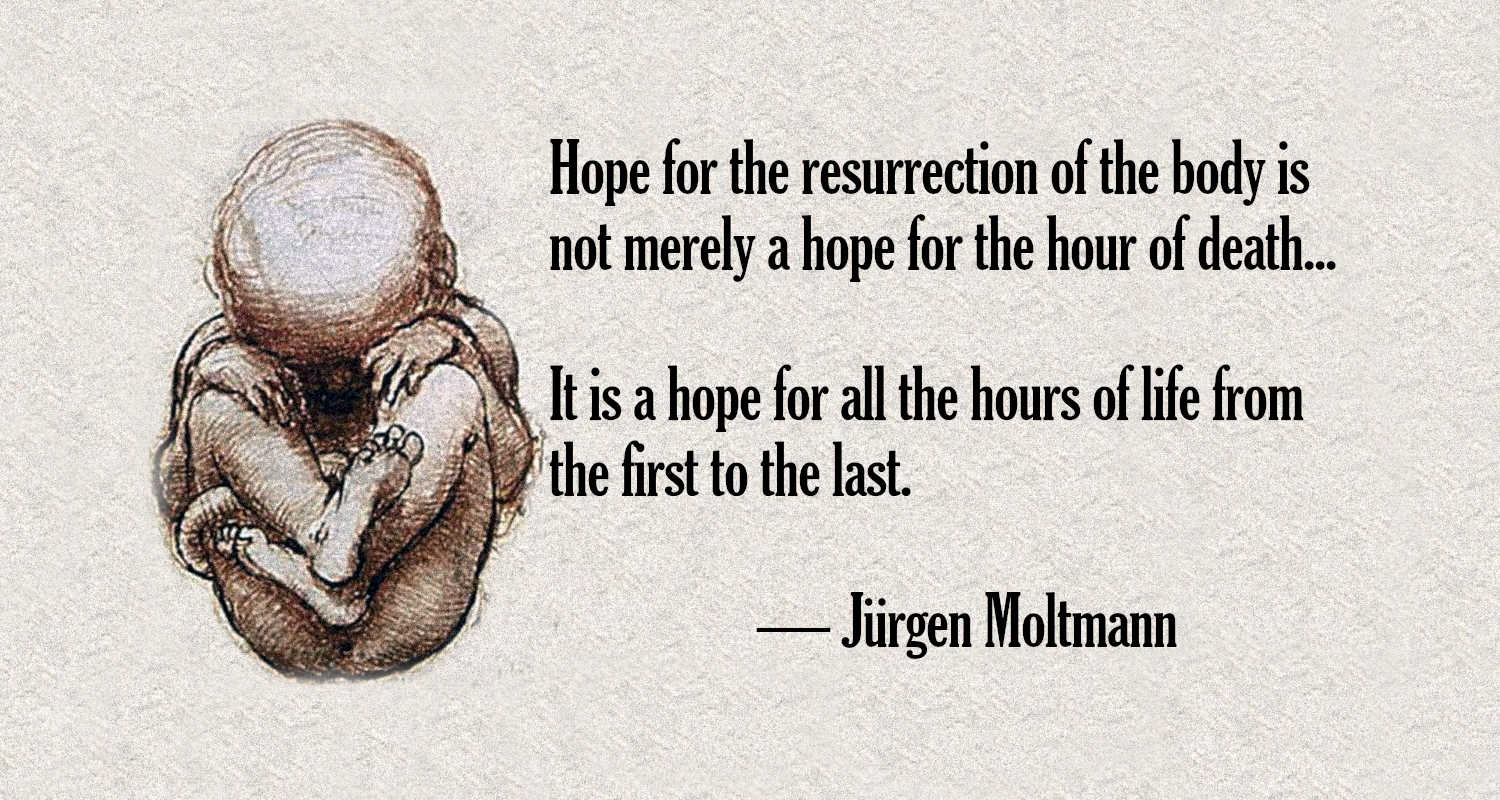
Jurgen Moltmann's "The Coming of God: Christian Eschatology"
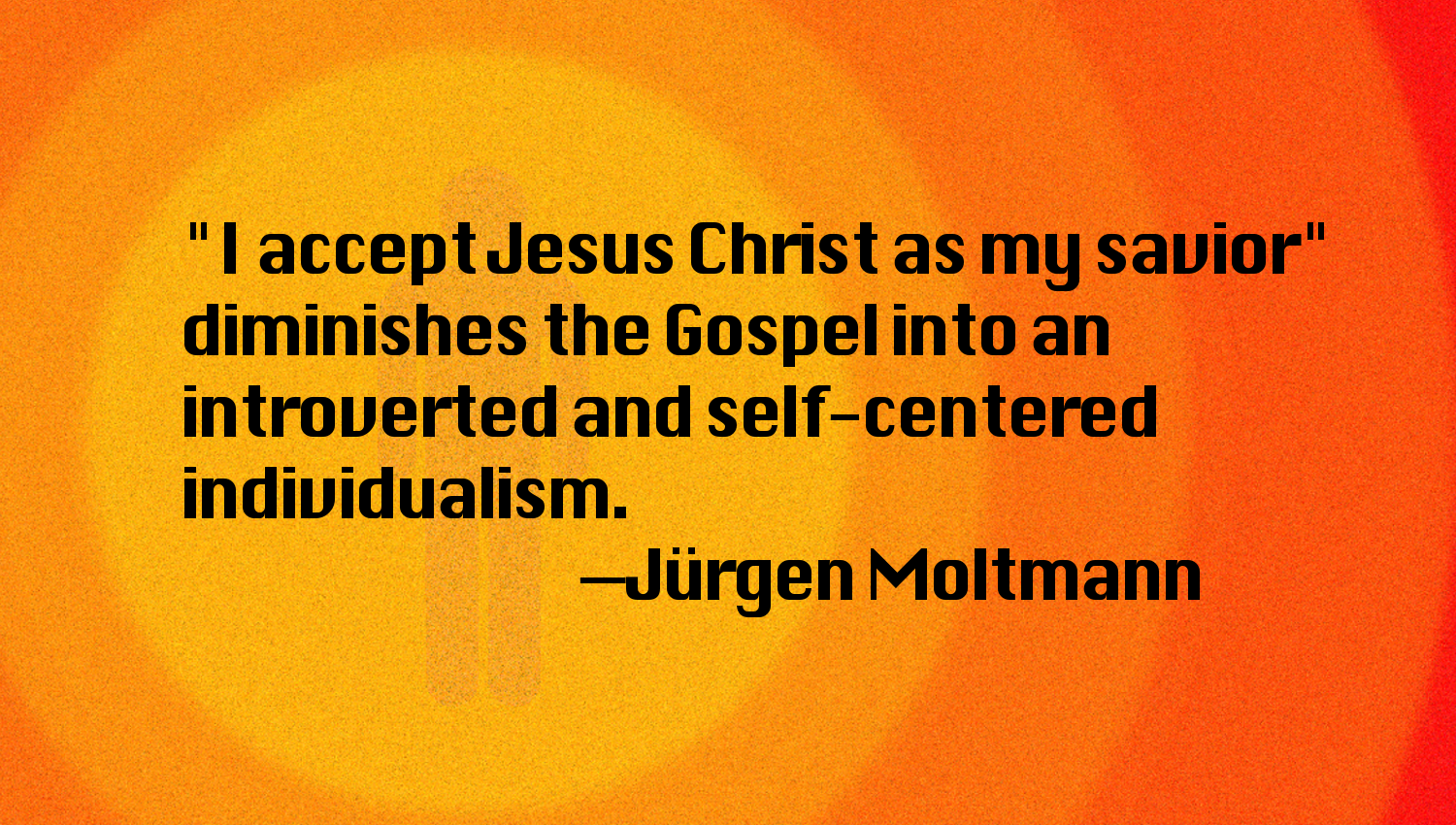
Jürgen Moltmann's critique of mainline evangelicalism's explanation of justification demonstrates a serious problem with common presentations of the gospel. If salvation ultimately comes down to a person's decision according to their own free will, then how is this explanation any different than Atheism? It excludes any saving action by God, and makes man the sole determiner of his fate: Yes or No. Consider the following quotation from Jürgen Molmann's "The Coming of God: Christian Eschatology". It's an excellent book. The Reformed Church's Doctrine of Election puts the saving action back into the unilateral action of God to save individuals and is not harmed by this critique. However, the implication is that a Semipelagian Gospel is an impossible to reconcile with the Gospel of God. Continue reading...


Blog RSS
Podcast RSS
Painting RSS
Photo Gallery RSS
John Calvin On Why He Wrote The Institutes