

houtz.tv
18Apr/110

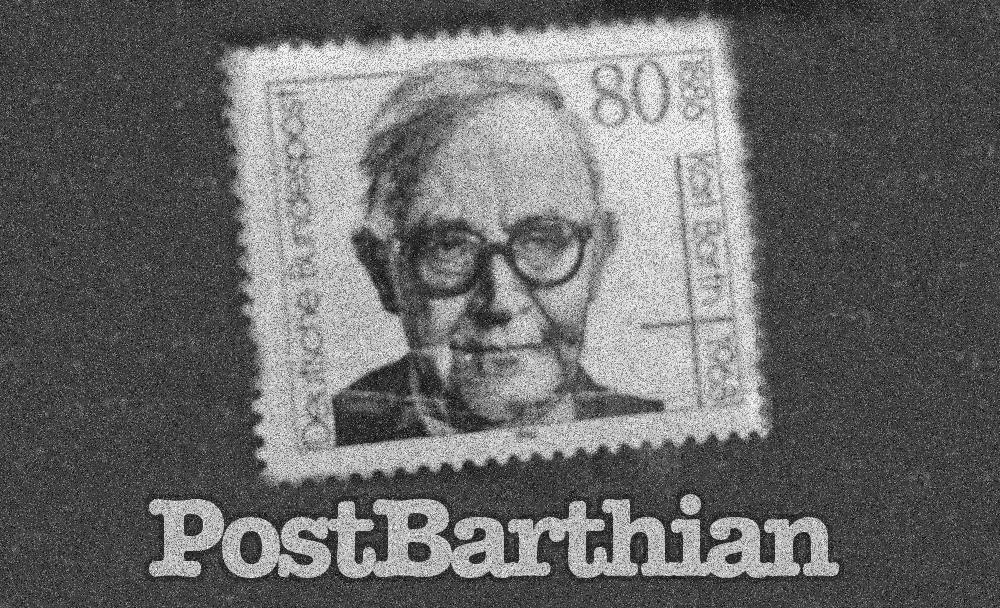
Karl Barth’s Doctrine of Election: Double Predestination in Jesus Christ

Karl Barth's Church Dogmatics Vol II.2 is the second half-volume of his "Doctrine of God" and contains Barth's Doctrine of Election. Barth emphasizes his admiration of Calvin's Doctrine of Election, and explains its superiority biblical basis to competing theories of election, but also Barth expresses his great dissatisfaction with concept of absolutum decretum that stands behind Calvin's Double Predestination. Barth appears to be most disgusted by the Synod of Dort for endorsement of absolutum decretum. Most of his rejection of absolutum decretum is based on Barth's belief that it is unloving and makes God a tyrant for condemning people who do not yet exist. I am paraphrasing the first two-hundred pages, and its difficult to extract clear statements from the Dogmatics, so I have most likely misrepresented what Barth is saying. The clearest point however is that Barth rejects absolutum decretum or Absolutism, where God absolute determines everything that ever existed.

Barth's rejection of absolutum decretum that begins at the end of the Church Dogmatics Vol II.1, appears to be the turning point from ambiguous orthodoxy to ambiguous heterodoxy. Barth claims that the biblical passages do support Double Predestination, but the objects of election are not individuals but rather the person of Jesus Christ. It is Jesus who is doubly elected, and not individuals, and Jesus is both elected to acceptance and rejection at the same time. And therefore he dodges the absolutum decretum by pointing it to Christ alone, and then denies that there is a specific election for any other individuals.

Some of this is the double-speak of Molinism, and I overlooked any polemic proving that it was any different than Arminianism. Somehow, Barth believes that a freewill exists on top of middle knowledge (scientia media), and this is his escape from absolutum decretum (as I explained in my previous post.)

Barth is right that we should not think of election in terms of individuals independent of Christ, because our election is "in Him". Barth continually returns to the "in Him" of Ephesians 1:4, to point our election as being a part of Christ's election. We should never think that our election is independant of Christ, or that Christ's salvation of the elect is secondary to absolutum decretum. (Stressing Christ's election to the point of obscuring the election of anything apart from Christ reduces election to meaninglessness.)


Ephesians 1:4 just as He chose us in Him before the foundation of the world, that we would be holy and blameless before Him. In love" 

ΠΡΟΣ ΕΦΕΣΙΟΥΣ 1:4 καθὼς ἐξελέξατο ἡμᾶς ἐν αὐτῷ πρὸ καταβολῆς κόσμου, εἶναι ἡμᾶς ἁγίους καὶ ἀμώμους κατενώπιον αὐτοῦ ἐν ἀγάπῃ,

Barth has an interesting discussion of Supralapsarianism verse Infralapsarianism, in his attempt to prove that absolutum decretum implies that election to reprobation would imply condemning an innocent individual. Barth turns the focus upon Christ, and then quotes verses demonstrating Christ's fellowship with all individuals. It's not many steps away from universalism, and I don't know how you may avoid that conclusion.

Barth's argument only confirms to me that Calvin's Double Predestination and the inclusion of absolutum decretum is the biblical position, and there's no other way to avoid it, but only to accept it in faith. Barth's Doctrine of Election reveals the distinction between Christianity and Barthianism.

On a side note, if God knows the free-will decision of every possible outcome, it only demonstrates that it is not free because it is knowable. And if God knows the outcome of the future, its because he knows not only the possible decisions but the actual outcomes of the decisions. It's amazing that man prefers the fickle and evil will of individuals to the all-loving unchanging eternal God's will, and calls the prior love and later tyranny. Isn't this only our fallen nature calling evil good and good evil?

By: Wyatt Houtz

14Nov/090

Freedom of the Will by Jonathan Edwards

I purchased and read the new Yale paperback edition of Jonathan Edward's The Works of Jonathan Edwards, Vol. 1: Freedom of the Will. Normally, each volume of the Yale Edition of Edward's Works costs over $100! but recently three of the volume were released as paper back editions. So I snatched up Vol1 for only $20! What a deal. It includes great footnotes and a long preface for the book's background. The full text of On The Freedom Of The Will is available online for free at the Yale Edwards Center.

Freedom of the Will is Edward's magnum opus, but despite of its huge influence, it is still very readable. Edward's sermons are the most accessible, but of his longer works, this is the easiest to follow along with deductions. This book is not a string of bible verses, but a long philosophical argument, so I was surprised how few times he quoted the bible. Edward's purpose is to show that by plain reason, Free Will (or Arminianism) is not a tenable position.

The book begins by defining Free Will and consider what various Arminians and Calvinists mean when they say that they have free will. Then Edwards begins to challenge the concept of a Free Will. What is it that caused you to choose what you chose? Is free will something that's different than the desire to choose? If your free will is truly free, do you have any choice over what you will do next? Basically Edwards practically discusses how is it that we have come to choose what we actually choose.

Towards the end of the book, Edwards answers several tough questions. For instance, he suggests that God himself doesn't have a free will, and must always choose what is most perfect by his nature. He is all powerful, unlike man, but he is bound to only do what is most holy and righteous in the end. Evil is described by God withholding his holiness, in the same way as if the sun were to stop shining than darkness would occur due to the nature of the things shined upon which have no light of their own.

Edwards also points out that Arminians are so insistent on free will, but they do so because of the presupposition that God is not evil, and if there was no-free will, then God would be the doer of evil... but consequently that view requires that God has no ability to do evil, and therefore does not have free will. So the only person in the arminian view who has free will is man. Edwards also notes that some people object to God not having a free will, but just because something is disagreeable doesn't mean its wrong.

Edwards also notes that if there is Free Will, then the future is not knowable or fixed. If God merely knows all the possible outcomes, then he cannot say for certain which of the outcomes will happen, so therefore God is unable to make promises to us about what will happen to us in the future. And when God makes prophecies, they are merely speculation or conjecture that could be thwarted by someone's free will. So if you accept that God could be thwarted, then you make Jesus out to be a liar, because Jesus promised exact things would happen, even saying that not one iota of his word would pass away, even though the whole world will pass away. The repercussions are mind blowing!

Overall an excellent book. I highly recommend it to anyone who has questions about predestination and election.

By: Wyatt Houtz


Switch to our mobile site