

houtz.tv
7Mar/110

Top Ten Books That Have Influenced Me

(The top ten books that have influenced me the most by reading them in order of most influential to least influential.)

1. "Institutes of the Christian Religion" by John Calvin.

If you only read one book outside the bible in your entire life, this should be that book. This book has been the greatest influence upon me and is still the greatest influence. Many of the questions Calvin answers are particular to his own age, but the world is still coming to terms with the Reformation and the Summa Theologica of the Reformation is Calvin's Institutes. One note however, I only recommend the translation by Ford Lewis Battles that is edited by John T. McNeill. (Monergism has an updated release of this translation, but I have not seen it yet.)

It is through Calvin's Institutes that I was introduced to Calvin's Commentaries which are free online. The fullness of Calvin's thought comes to life in the Institutes when supplemented by these commentaries.

2. "City of God" by Augustine of Hippo

Augustine is the man whom all other theologians stand upon. So it is easy to take him for granted, but remembering that Calvin's Institutes is only a footnote the works of Augustine will show you his immense influence upon me, even if indirectly. I have been influenced by his Confessions, Enchiridion, and especially the treaties "On The Trinity" but the City of God is the magnum opus that unfolds Augustine's thought in a romantic and illuminating way. Augustine is a orator, so his works were written to be read, but the arguments are so simple and clear, that the depth of what he has written is not always realized until others attempt to criticize him.

I particularly recommend the translation by Henry Bettenson that is available in the Penguin Classics series as a very cheap paperback.

3. "Freedom of the Will" by Jonathan Edwards

Jonathan Edwards was introduced to me through John Piper, and Edwards is a close second to John Calvin in his overall influence upon my understanding of theology. If there is anyone's opinion who can stand up to John Calvin, it is Jonathan Edwards. All 73 volumes of Edwards works are available online for free at Yale's Jonathan Edwards Center. There are many books I've read by Edwards, however the Freedom of the Will is the clearest and easiest to read, and is the apex book on Double Predestination. Anyone who disagrees with predestination will have to engage this masterpiece.

Although this is the most influential book by Edwards, there is an Unpublished Essay on the Trinity that has influenced me far more than anything else Edwards has written. This archive includes Freedom of the Will, and also Edward's Blank Bible, which I use all the time.

Edward's Religious Affections was a close second place. The Nature of True Virtue and many of his sermon readers are notable as well.

4. "Biblical Doctrines" by B.B. Warfield.

On the heals of Calvin and Edwards is B.B. Warfield. I am actually most influenced today by Warfield's "Calvin and Calvinism" but it is out of print. I was introduced to B.B. Warfield when I found several of his books at a used book store for a few dollars each. The first I read was the "Inspiration and Authority of the Bible" and I was impressed by how scholarly and evident Warfield argued his points, which was far better than any theology book I had ever read. However, it was very hard for me to choose which one of his books most influenced me, that is also easily available to purchase. So I have chosen Biblical Doctrines, which covers topics between "Calvin and Calvinism" to "Inspiration and Authority of the Bible". 

If you would like to be introduced to Warfield, I suggest starting with "Biblical Doctrines" instead and then read "Studies in Theology" after that before "Inspiration and Authority of the Bible".

5. "Jesus and the Victory of God" by N.T. Wright

N.T. Wright is influential in a different way than the previous three books. I would prefer to list the entire three volume "Christian Origins and the Question of God" series, but this is well over 1500pages, so I have chosen volume two as the most influential book, but volume three, "The Resurrection of the Son of God" (RSG), is a close second. The supreme value of N.T. Wright is his willingness to engage critical and liberal scholars and although many reformed theologians do not think he is conservative (or reformed enough), the overall value Wright adds is far beyond what he lacks. (N.T. Wright may challenge my suggestion that he lacks anything). The value of "Jesus and the Victory of God" (JVG) is that it is a productive look at the humanity of Christ which is often overshadowed by Christ's divine nature in reformed scholasticism.

The RSG is also a magnum opus of its own right, with an impressive bibliography, its hard to understand how this book was written in a man's lifetime.

N.T. Wright is most well known for his views in the New Perspective on Paul however, the first three volumes do not address this topic in depth, and I expect this to be discussed in the forth coming volume 4: "Paul and the Faithfulness of God". This is a six volume series but only the first three have been completed. The last two expected are on the four evangulists and a summary respectively. I've read many of Wright's shorter volumes on Paul, and highly recommend them as well, but it was JVG that introduced me to all the material on the Quest for the Historical Jesus. And as Wright said, the Reformation was the true first quest.

6. "The Difficult Doctrine of the Love of God" by D.A. Carson

Carson has influenced me tremendously through online podcasts articles, and conferences. I have read several of this books, but this short title is supremely valuable for understanding theodicy in a reformed perspective. D.A. Carson's "Commentary on the Gospel of John" is an amazing work, but commentaries are not quite what I wish to discuss in this article. I may give another top ten on technical books or commentaries someday.

7. "The Death of Death in the Death of Christ: A Treatise in Which the Whole Controversy about Universal Redemption is Fully Discussed" by John Owen

"Death of Death" would have influenced me far more if I had had read it years ago. It is a definitive polemic on the "L" of the TULIP that is "Limited Atonement". John Owen has been popularized by Justin Taylor, and you may read many of John Owen's works online for free..

Another book by Owen that is excellent is his "Mortification of Sin." I highly recommend it as well.

8. "The Francis A. Schaeffer Trilogy: Three Essential Books in One Volume: The God Who Is There; Escape from Reason; He Is There and He Is Not Silent" by Francis Schaeffer

Schaeffer's Trilogy is an excellent introduction to engaging modernism and culture and understanding how worldviews have changed over the last two hundred years. This book was an invaluable introduction to many of the authors covered and I highly recommend him.

9. "A Theology of the New Testament" by G.E. Ladd

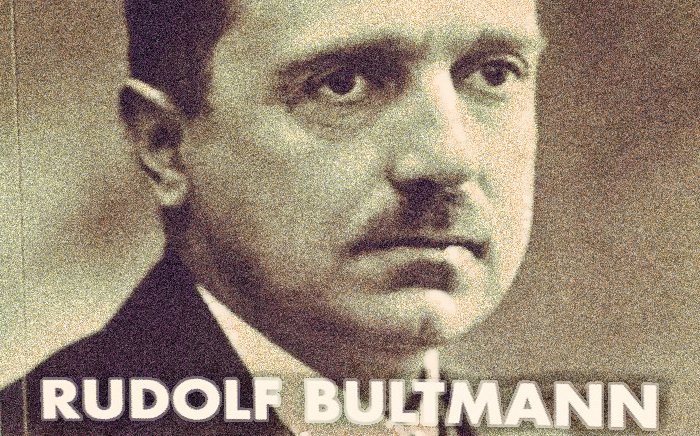
I am not so much influenced by Ladd as I once was, but for someone who has never read much theology beyond Christian Living, this is a great introduction to some amazing ideas. Much of this book was driven by answering Rudolf Bultmann's "Theology of the New Testament" and Ladd provides answers to Bultmann's demythologizing.

10. "Desiring God: Meditations of a Christian Hedonist" by John Piper

I had a hard time choosing "Desiring God" because I enjoyed Piper's "The Pleasures of God: Meditiations on God's Delight in Being God" much more. However, it was "Desiring God" that introduced me to everything I now love, so I am greatly indebted to the seeds this book sewed.

Honorable Mention: "Mere Christianity" by C.S. Lewis

It's been about a decade since I first read this book, but it was influential as a bridge from Christian Radio and Christian Living books into the meat of theology. Lewis has many aberrant theological views, but some of his arguments are ingenious. This is a must read for anyone starting out in theology, however many people today struggle with his ideas.

Notable References:

  • D. Martin-Llyod Jones, "Studies in the Sermons on the Mount"
  • Eusebius, "Church History"
  • Karl Rahner, "Trinity"
  • Schleiermacher, "On The Christian Faith"
  • Martin Luther's "Three Treaties: Babylon Captivity of the Church; Letter to the German Nobility; and 95 Thesis"

There are many great books that I've read which are not on this list, because these books are ones that have influenced me the most, and influence is a subjective metric, even to the point of saying tomorrow could produce a different list.

By: Wyatt Houtz

22Feb/110

Ten Theologians That Have Influenced Me

Here is my "Top Ten List of Most Influential Theologians." I'll quickly stress that the following theologians have influenced me the most, and only contains books that I've read too. I've excluded authors, if I've only read one of their books too. Some of these authors (like Calvin, Edwards and Warfield) are still very influential to me, but others like (G.E. Ladd and John Piper) were very helpful stepping-stones in the past but are no longer as influential to me as they once where. So there's several gotchas.

The following list is roughly in order by most influential theologian to least, and the titles are generally arranged by most influential to least influential with a supplemental list of related books I've read about the author worth noting.

  1. John Calvin

    1. Institutes of the Christian Religion
    2. Calvin Commentaries
    3. Related:
      1. John Calvin (a biography by Theodore Beza)
      2. Calvin (a biography by Bruce Gordon)
      3. Lectures on Calvinism (by Abraham Kuyper)
      4. The Legacy of Sovereign Joy:  God's Triumphant Grace in the Lives of Augustine, Luther, and Calvin (The Swans Are Not Silent)
      5. Calvin and Augustine (by Benjamin Breckinridge Warfield)
  2. Jonathan Edwards

    1. On The Freedom Of The Will
    2. An Unpublished Essay on the Trinity
    3. Religious Affections
    4. The Preciousness Of Time And The Importance Of Redeeming It
    5. The Nature of True Virtue
    6. The Sermons of Jonathan Edwards: A Reader
    7. The Blessing of God: Previously Unpublished Sermons of Jonathan Edwards
    8. The Blank Bible
    9. Related:
      1. Jonathan Edwards: A Life (a biography by George Marsden)
      2. The Supreme Harmony of All: The Trinitarian Theology of Jonathan Edwards by Amy Plantinga Pauw
  3. Augustine of Hippo

    1. On The Trinity
    2. The City of God (translated by Henry Bettenson)
    3. Confessions
    4. Enchiridion
    5. The Literal Meaning of Genesis Vol 1
    6. Related:
      1. The Legacy of Sovereign Joy:  God's Triumphant Grace in the Lives of Augustine, Luther, and Calvin (The Swans Are Not Silent)
      2. Calvin and Augustine (by Benjamin Breckinridge Warfield)
  4. Benjamin Breckinridge Warfield

    1. The Authority and Inspiration of the Scriptures
    2. Calvin and Augustine
    3. Biblical Doctrines
    4. Person and Work of Christ
    5. Studies in Theology
    6. Evolution, Science,  and Scripture: Selected Writings (edited by Mark Noll and David Livingstone)
    7. The Plan of Salvation
  5. D. A. Carson

    1. The Difficult Doctrine of the Love of God
    2. Christ and Culture: Revisited
    3. The Gospel According to John
    4. Exegetical Fallacies
    5. The KJV Debate: A Plea for Realism
    6. For the Love of God: A Daily Companion for Discovering the Riches of God's Word Volume 1
    7. For the Love of God: A Daily Companion for Discovering the Riches of God's Word Volume 2
    8. The Farewell Discourse and Final Prayer of Jesus
    9. NT use of the OT
    10. Podcasts and online content
  6. N.T. Wright

    1. Resurrection of the Son of God
    2. Jesus and the Victory of God
    3. The New Testament People of God
    4. Paul: In Fresh Perspective
    5. Judas and the Gospel of Jesus
    6. Related:
      1. The Future of Justification: A Response to N. T. Wright (by John Piper)
  7. John Owen

    1. Death of Death in the Death of Christ
    2. On the Mortification of Sin in Believers
  8. John Piper

    1. Desiring God: Meditations of a Christian Hedonist
    2. The Pleasures of God: Meditations on God's Delight in Being God
    3. The Future of Justification: A Response to N. T. Wright
    4. The Legacy of Sovereign Joy:  God's Triumphant Grace in the Lives of Augustine, Luther, and Calvin (The Swans Are Not Silent)
    5. Podcasts and online content
  9. Martin Luther

    1. Table Talk
    2. 95 Thesis
    3. Babylonian Captivity of the Church
    4. Letter to the Christian Nobility of the German Nation
    5. Related:
      1. Here I Stand : A Life of Martin Luther (by Roland Bainton)
      2. The Legacy of Sovereign Joy:  God's Triumphant Grace in the Lives of Augustine, Luther, and Calvin (The Swans Are Not Silent)
  10. George Eldon Ladd

    1. Theology of the New Testament
    2. The New Testament and Criticism
    3. The Gospel of the Kingdom
    4. Related:
      1. A Place at the Table: George Eldon Ladd and the Rehabilitation of Evangelical Scholarship in America (a biography by John A. D’Elia)

By: Wyatt Houtz

25Mar/090

The Future of Justification (Review)

This month, I read John Piper's recent book, "The Future of Justification: A Response to N. T. Wright". You can download the entire book in PDF format from the Desiring God website for free too!

I used to make fun of people who called John Piper a prophet, but now I keep my mouth shut when people make that suggestion. The most important part of this book is that it quotes at length all the passages from the N.T. Wright corpus that makes your eye brows raise. I recently read N.T. Wright's amazing book titled "The Resurrection of the Son of God" and on almost every page, N.T. Wright writes something amazing, provocative and compelling for the Christian faith but then he writes something that makes your eye brows raise, and you think "did he really just write that?" and I admit, that I tend to forgive the errors that N.T. Wright makes because of the marvelous things that he does write!

Piper is truly marvelous, because he has gathered all those phrases together into one short book. If you were to compile all those "eyebrow raising anecdotes" into one small corpus, you realize that N.T. Wright has some oddities about him that are very troubling! Piper is always amazing, and when you isolate all the nuances of Wright into one book, you reconsider all the grace you've given him. I love Wright's books, because they have been so beneficial to Christian orthodoxy, but they cannot come as a compromise to what we have cherished for so long! I say, bring on the N.T. Wright books, let us learn from them, but bring on the John Piper books that keep us orthodox.

This is not my favorite John Piper book, because "The Pleasures of God" and "Desiring God" are as ground breaking as anything N.T. Wright has ever composed, but "The Future of Justification" is the exact watch dog we need, to keep us from drifting away from orthodoxy.

By: Wyatt Houtz

17Oct/080

Paul: In Fresh Perspective

I'm reading Paul: In Fresh Perspective by N.T. Wright. It's a short 170pg book that briefly covers N.T. Wright's conservative (and reasonably orthodox) version of the New Perspective on Paul that is different from the liberal extremes of E.P. Sanders and James Dunn. In "Paul", N.T. Wright discusses the three worldviews of Paul: Second Temple Judaism, the Roman Empire, and his association with Jesus Christ as the Messiah. Each of these world views are analyzed against N.T. Wright's meta-narrative approach to understanding Paul: Creation vs Covenant, Messiah vs Apocalyptic, and Gospel vs the Roman Empire. The worldviews and the meta-narratives fuse together Paul's theology into a Covenantal Nomism where Salvation History soteriology is stressed as building throughout history rather than an a-historical view of salvation. The cross of Christ is still defined as the unexpected event that has always been a part of the plan that causes the election of God's people. The cross extends the holy people and land to all peoples and the entire earth by consider creation and covenant as synonyms in the dikaiosune theou ("righteousness of God").

N.T. Wright uses his meta-narrative approach to prove that Colossians and Ephesians and the Pauline portions of Acts are correctly ascribed to Paul. This wins him favor with conservative scholarship (and myself!), but I fear it is at the consequence of clouding our understanding of Paul over all. N.T. Wright's three-fold analysis of Philippi does add clarity by explaining the pros-and-cons of the city's annexation by the Rome Empire, and I found Wright's exegesis of Philippians 2 very good when he used his hermaneutic to exegete the church's charge to "work our their salvation when it is God who actually works." Wright's methodology also demonstrates that the letter to the Galatians was among the first books written in the New Testament. So I find the book valuable two fold, for using the world-view of second-Temple Judaism to read Paul's literature, and second to put down disputes against Paul's authorship.

N.T. Wright also considers 2 Baruch, 4 Ezra and a few other Jewish Apocalyptic writings. I believe this would be informative to many Christians who do not know about these letter's existence, but my reading of those letters didn't bring me to the same conclusions that he arrived upon, so I was skeptical rather than intrigued. I am no expect, so maybe I should read those letters again.

Lastly, my overall gripe against N.T. Wright is that I would value his literature far more if he didn't put me on the defense all the time. I feel that the New Perspective on Paul has some value but its forced at the loss of a plain reading of Paul's writings. This is also my concern with Karl Barth as well. Reinterpretation is very valuable as long as it doesn't interpret away what is obviously before our face.

Overall, I consider N.T. Wright's view orthodox and very good, with only a few hesitations. I recommend this book as an introduction to N.T. Wright.

By: Wyatt Houtz


Switch to our mobile site