

houtz.tv
8Mar/120

Rudolf Bultmann: de-mythologizing, Gnosticism and his works

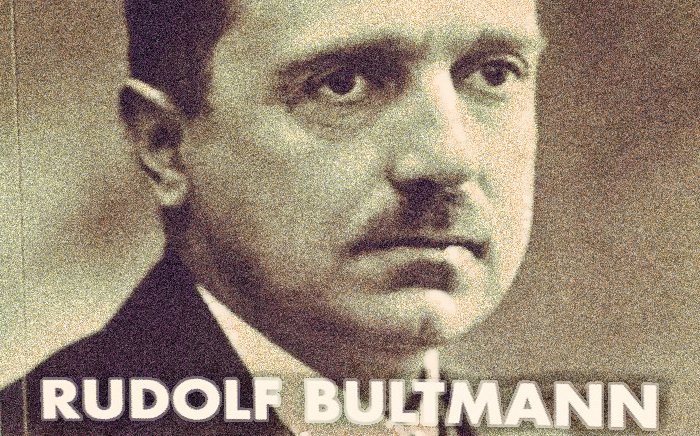
Rudolf Bultmann  (1884-1976) was a German Lutheran theologian who taught at the University of Marburg. Bultmann is well know for his de-mythologizing method that he attempted to purge the New Testament of what he perceived to be legendary accretions to the Christian Tradition. The method is historically reminiscent of the penknife redaction of Marcion of Sinope (ca. 85-160) in the second century. Bultmann's de-mythologizing is part of the modern Higher Criticism and Form Criticism methodologies. Examples of Bultmann's de-mythologizing attempts are his all of his book, of which Jesus Christ and Mythology is arguably the most well known. Here is a helpful introduction from the appendix of Pope Benedict XVI's Jesus of Nazareth.

Continue reading...

22Feb/110

Ten Theologians That Have Influenced Me

Here is my "Top Ten List of Most Influential Theologians." I'll quickly stress that the following theologians have influenced me the most, and only contains books that I've read too. I've excluded authors, if I've only read one of their books too. Some of these authors (like Calvin, Edwards and Warfield) are still very influential to me, but others like (G.E. Ladd and John Piper) were very helpful stepping-stones in the past but are no longer as influential to me as they once where. So there's several gotchas.

The following list is roughly in order by most influential theologian to least, and the titles are generally arranged by most influential to least influential with a supplemental list of related books I've read about the author worth noting.

  1. John Calvin

    1. Institutes of the Christian Religion
    2. Calvin Commentaries
    3. Related:
      1. John Calvin (a biography by Theodore Beza)
      2. Calvin (a biography by Bruce Gordon)
      3. Lectures on Calvinism (by Abraham Kuyper)
      4. The Legacy of Sovereign Joy:  God's Triumphant Grace in the Lives of Augustine, Luther, and Calvin (The Swans Are Not Silent)
      5. Calvin and Augustine (by Benjamin Breckinridge Warfield)
  2. Jonathan Edwards

    1. On The Freedom Of The Will
    2. An Unpublished Essay on the Trinity
    3. Religious Affections
    4. The Preciousness Of Time And The Importance Of Redeeming It
    5. The Nature of True Virtue
    6. The Sermons of Jonathan Edwards: A Reader
    7. The Blessing of God: Previously Unpublished Sermons of Jonathan Edwards
    8. The Blank Bible
    9. Related:
      1. Jonathan Edwards: A Life (a biography by George Marsden)
      2. The Supreme Harmony of All: The Trinitarian Theology of Jonathan Edwards by Amy Plantinga Pauw
  3. Augustine of Hippo

    1. On The Trinity
    2. The City of God (translated by Henry Bettenson)
    3. Confessions
    4. Enchiridion
    5. The Literal Meaning of Genesis Vol 1
    6. Related:
      1. The Legacy of Sovereign Joy:  God's Triumphant Grace in the Lives of Augustine, Luther, and Calvin (The Swans Are Not Silent)
      2. Calvin and Augustine (by Benjamin Breckinridge Warfield)
  4. Benjamin Breckinridge Warfield

    1. The Authority and Inspiration of the Scriptures
    2. Calvin and Augustine
    3. Biblical Doctrines
    4. Person and Work of Christ
    5. Studies in Theology
    6. Evolution, Science,  and Scripture: Selected Writings (edited by Mark Noll and David Livingstone)
    7. The Plan of Salvation
  5. D. A. Carson

    1. The Difficult Doctrine of the Love of God
    2. Christ and Culture: Revisited
    3. The Gospel According to John
    4. Exegetical Fallacies
    5. The KJV Debate: A Plea for Realism
    6. For the Love of God: A Daily Companion for Discovering the Riches of God's Word Volume 1
    7. For the Love of God: A Daily Companion for Discovering the Riches of God's Word Volume 2
    8. The Farewell Discourse and Final Prayer of Jesus
    9. NT use of the OT
    10. Podcasts and online content
  6. N.T. Wright

    1. Resurrection of the Son of God
    2. Jesus and the Victory of God
    3. The New Testament People of God
    4. Paul: In Fresh Perspective
    5. Judas and the Gospel of Jesus
    6. Related:
      1. The Future of Justification: A Response to N. T. Wright (by John Piper)
  7. John Owen

    1. Death of Death in the Death of Christ
    2. On the Mortification of Sin in Believers
  8. John Piper

    1. Desiring God: Meditations of a Christian Hedonist
    2. The Pleasures of God: Meditations on God's Delight in Being God
    3. The Future of Justification: A Response to N. T. Wright
    4. The Legacy of Sovereign Joy:  God's Triumphant Grace in the Lives of Augustine, Luther, and Calvin (The Swans Are Not Silent)
    5. Podcasts and online content
  9. Martin Luther

    1. Table Talk
    2. 95 Thesis
    3. Babylonian Captivity of the Church
    4. Letter to the Christian Nobility of the German Nation
    5. Related:
      1. Here I Stand : A Life of Martin Luther (by Roland Bainton)
      2. The Legacy of Sovereign Joy:  God's Triumphant Grace in the Lives of Augustine, Luther, and Calvin (The Swans Are Not Silent)
  10. George Eldon Ladd

    1. Theology of the New Testament
    2. The New Testament and Criticism
    3. The Gospel of the Kingdom
    4. Related:
      1. A Place at the Table: George Eldon Ladd and the Rehabilitation of Evangelical Scholarship in America (a biography by John A. D’Elia)

By: Wyatt Houtz

1Apr/090

The New Testament and Criticism (Review)

I'm reading a very good and short book called The New Testament and Criticism by George Eldon Ladd. I found the book at Half Price Books and negotiated it down from $5.98 to $4.98 too! Cha-Ching!

This book is a great primary to the way the biblical is studied in secular universities. Ladd spends a chapter on each of the forms of criticisms, and explains the way that these techniques help us understand the bible and know the ways they are used to attack the bible. Ladd has an optimistic and sobering approach covers a plethora of important information in a very concise and short 200pg book.

Here are the primary forms:

  • Textual Criticism or Lower Criticism is the study of biblical manuscripts in order to correct scribal errors and recover the original manuscript

  • Linguistic Criticism is the study of Languages, specifically the correct translation of a word from Hebrew, Greek or Aramaic.

  • Literary Criticism is the study of the bible's literary form, poetry, historical narrative, etc. to determine the author's intent and meaning.

  • Form Criticism is the study of changes in the bible's form over time and place, including the Snoptic Problem and the Documentary Hypothesis

  • Historical Criticism or Higher Criticism is studying the author's manuscript against what actually happens to determine the authors subjective opinion. Example is the Quest for the Historical Jesus, and similar studies to determine if what Jesus said was altered by the New Testament Writers.

  • Comparative Religions Criticism is the comparison of Christianity to Judaism, Islam, or just the commonality of religions.

G.E. Ladd's presupposition is stated by his quote, "The Bible is both the Word of God and the words of men." Ladd emphasizes the human nature of the bible, and continually returns to the error filled Greek manuscripts that were used as a source to the KJV Bible. Ladd believes if the bible was truly inspired and a magical book then there should be no variations in the best know manuscripts. He also writes that the modern Greek bibles are all in agreement with each other, and suggests that these criticism methods have recovered the original manuscripts that had long perished into dust. Even with the variations in the KJV, no important doctrine was jeopardized by the variations between manuscripts. I don't believe G.E. Ladd has the last word on Biblical Inspiration but this primer has been very informative and I highly recommend it!

I also recommend G.E. Ladd's magnum opus, A Theology of the New Testament

By: Wyatt Houtz


Switch to our mobile site