

Barth’s The Authority of the Word of God (CD I.2 §20.1)

Karl Barth's Church Dogmatics I.2, §20.1 (pages 538-585) on "The Authority of the Word of God" has an extended discussion about the authority of the Holy Scriptures in contrast to the authority of the Church. (You may read it entirety on Google Books here.) The fundamental question is whether the Church gives authority to the scripture and defines what is and is not the Holy Scriptures, or is it the other way around that the Church has authority because it is derived from the Holy Scriptures?
Karl Barth says that the Holy Scriptures are the oldest witnesses to the revelation of God. Barth points to Jesus Christ as the objective revelation of God earlier in this volume I.2 of his Church Dogmatics (CD). Barth says that Jesus is very human and very God, and even if other religions teach similar truths as Christianity they are still not the revelation of God (even if they are religions of grace) because they do not have the very man and very God person of Jesus Christ.
Church Dogmatics Vol I.2: The Doctrine of the Word of God by Karl Barth
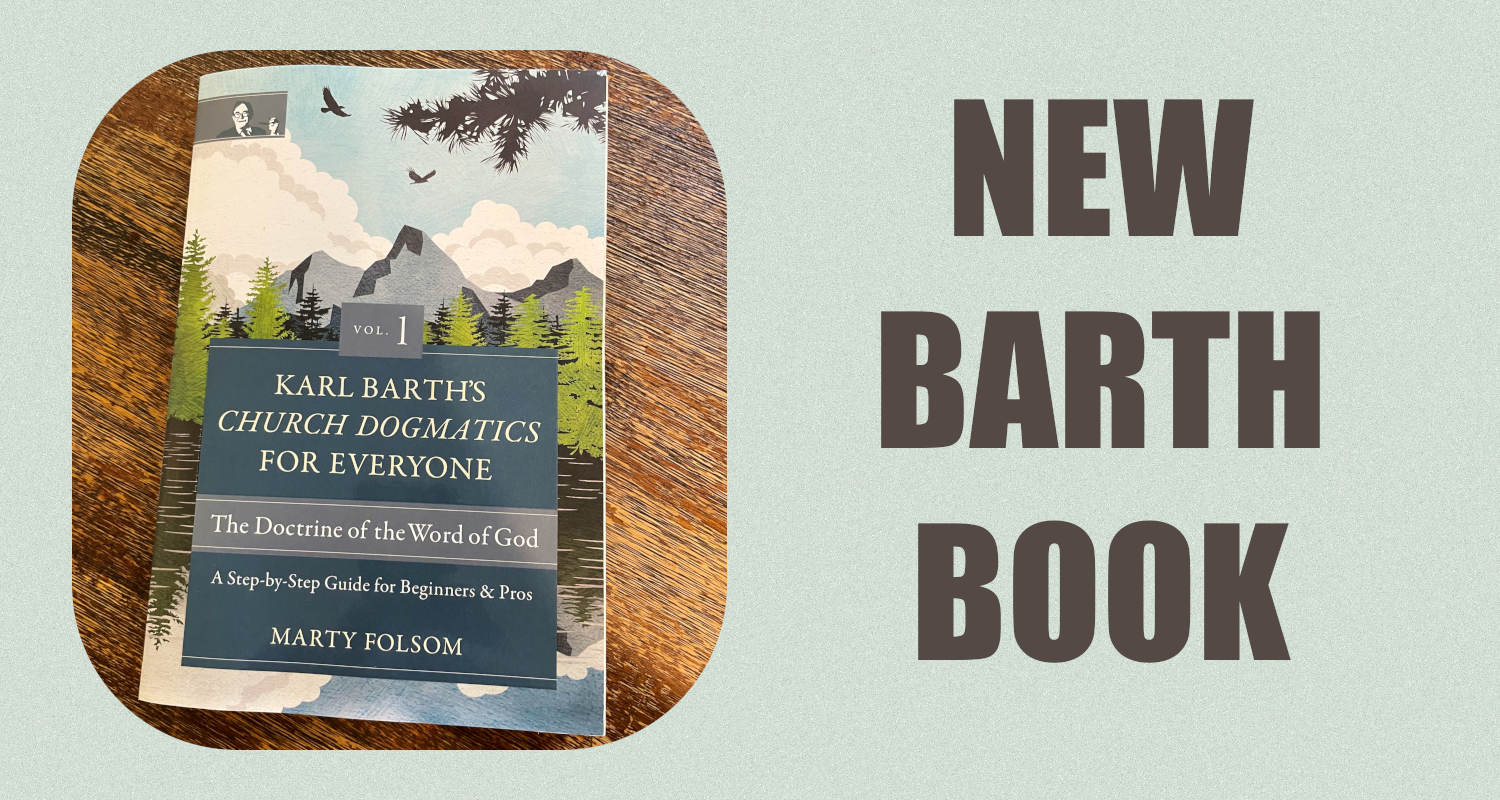
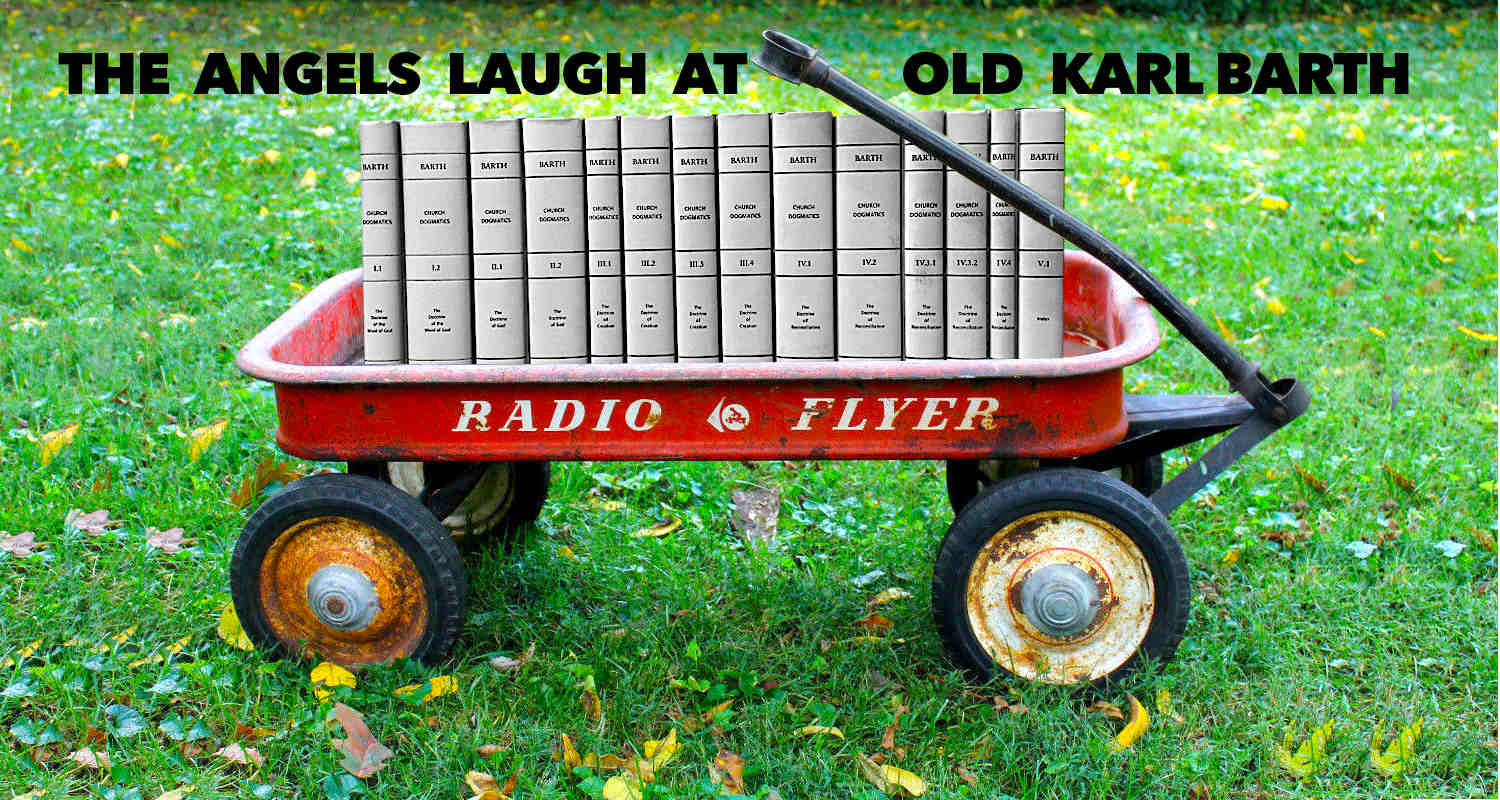
Karl Barth is difficult to explain, which explains why so many people dismiss Barth without reading what he wrote. Engaging With Barth requires reading his Church Dogmatics (CD), which I have been doing so at a good pace yet out of order. It's been difficult to procure an affordable copy of the fourteen volume series until recently. I read half of volume I.1 in PDF format, then found a very old copy of volumes II.1 & II.2 (The Doctrine of God) on an "Old & Interesting" book shelf at a local used book dealer. I purchased a reprint of the fourteen volume series last year, and now I am three-fifths through volume I.2. I've had a serpentine path that will straighten out once I complete this volume, which also happens to be the largest in the series. Reading the Church Dogmatics is a bit like the way I read through the first four volumes. Continue reading...
Karl Barth’s Doctrine of Election: Double Predestination in Jesus Christ
Karl Barth's Church Dogmatics Vol II.2 is the second half-volume of his "Doctrine of God" and contains Barth's Doctrine of Election. Barth emphasizes his admiration of Calvin's Doctrine of Election, and explains its superiority biblical basis to competing theories of election, but also Barth expresses his great dissatisfaction with concept of absolutum decretum that stands behind Calvin's Double Predestination. Barth appears to be most disgusted by the Synod of Dort for endorsement of absolutum decretum. Most of his rejection of absolutum decretum is based on Barth's belief that it is unloving and makes God a tyrant for condemning people who do not yet exist. I am paraphrasing the first two-hundred pages, and its difficult to extract clear statements from the Dogmatics, so I have most likely misrepresented what Barth is saying. The clearest point however is that Barth rejects absolutum decretum or Absolutism, where God absolute determines everything that ever existed. Barth's rejection of absolutum decretum that begins at the end of the Church Dogmatics Vol II.1, appears to be the turning point from ambiguous orthodoxy to ambiguous heterodoxy. Barth claims that the biblical passages do support Double Predestination, but the objects of election are not individuals but rather the person of Jesus Christ. It is Jesus who is doubly elected, and not individuals, and Jesus is both elected to acceptance and rejection at the same time. And therefore he dodges the absolutum decretum by pointing it to Christ alone, and then denies that there is a specific election for any other individuals.
Some of this is the double-speak of Molinism, and I overlooked any polemic proving that it was any different than Arminianism. Somehow, Barth believes that a freewill exists on top of middle knowledge (scientia media), and this is his escape from absolutum decretum (as I explained in my previous post.)
Barth is right that we should not think of election in terms of individuals independent of Christ, because our election is "in Him". Barth continually returns to the "in Him" of Ephesians 1:4, to point our election as being a part of Christ's election. We should never think that our election is independant of Christ, or that Christ's salvation of the elect is secondary to absolutum decretum. (Stressing Christ's election to the point of obscuring the election of anything apart from Christ reduces election to meaninglessness.)
Ephesians 1:4 just as He chose us in Him before the foundation of the world, that we would be holy and blameless before Him. In love"ΠΡΟΣ ΕΦΕΣΙΟΥΣ 1:4 καθὼς ἐξελέξατο ἡμᾶς ἐν αὐτῷ πρὸ καταβολῆς κόσμου, εἶναι ἡμᾶς ἁγίους καὶ ἀμώμους κατενώπιον αὐτοῦ ἐν ἀγάπῃ,
Barth has an interesting discussion of Supralapsarianism verse Infralapsarianism, in his attempt to prove that absolutum decretum implies that election to reprobation would imply condemning an innocent individual. Barth turns the focus upon Christ, and then quotes verses demonstrating Christ's fellowship with all individuals. It's not many steps away from universalism, and I don't know how you may avoid that conclusion.
Barth's argument only confirms to me that Calvin's Double Predestination and the inclusion of absolutum decretum is the biblical position, and there's no other way to avoid it, but only to accept it in faith. Barth's Doctrine of Election reveals the distinction between Christianity and Barthianism.
On a side note, if God knows the free-will decision of every possible outcome, it only demonstrates that it is not free because it is knowable. And if God knows the outcome of the future, its because he knows not only the possible decisions but the actual outcomes of the decisions. It's amazing that man prefers the fickle and evil will of individuals to the all-loving unchanging eternal God's will, and calls the prior love and later tyranny. Isn't this only our fallen nature calling evil good and good evil?
Karl Barth: Doctrine of God Vol II.1
I like Karl Barth much more than I did before I read him directly. How's that for an honest statement? I'll say the same thing about Schleiermacher's Christian Faith. However much I do enjoy reading Barth, its never without reservation. I would never flip to a page in the Dogmatics and trust it with authority like I would with Calvin's Institutes. The great value is his provocative thinking and excellent exegesis. Even when I do not agree with Barth, he has done his homework, and provides copious direct quotations from great authorities such as Augustine, Aquinas, Luther, Calvin and other Church Fathers. His arguments are very good, although the flowery dialectic makes the arguments difficult to follow, but that's due to the subjects he's entertaining. After reading Karl Barth's Church Dogmatics Volume 2.1 The Doctrine of God (the first of two half volumes), I wanted to list a few reflections on the topics in this book. It will take too long to quote the Doctrine of God, so unfortunately I will not be as good of an exegete as Barth himself.
Authorities
There are several authors that Barth quotes often in that I've never heard of before, and they are used primarily has authorities and heirs to Calvin and the original reformers.- Johannes Coccejus (1603 1669), A Dutch theologian who wrote a large reformed systematic theology called: "Summa Doctrinae de Foedere et Testamento Dei" (1648)
- Johannes Andreas Quenstedt (1617 1688) A German Lutheran "Theologia didactico-polemica sive systema theologicum"(1685)
- Amandus Polanus (1561-1610), quoted as an authority for the "older" Reformed Theology, especially in his: "Syntagma Theologiae Christianae" (1609)
- Franciscus Gomarus (1563 - 1641) A Dutch Theologian, and Calvinist authority. Especially, his: "Opera Theologica Omnia" (1644 posth)
Natural Revelation
Barth is famous for his denial of Natural Revelation, and this argument is fully developed in this volume. As a protestant, I reject Thomas Aquinas and the Roman Catholic's Nature and Grace distinctions, and deny that salvific knowledge may be derived from nature. However, I stand with Calvin against Barth's insistence that no knowledge of God may be known from nature apart from God's word. Romans 1-2 are the clearest texts demonstrating Calvin's sensus divinus that exists in all men. However, Barth makes an excellent counter argument that any knowledge of God obtained from nature (and specifically philosophy) quickly turns into a false-God which stands in opposition to the true God. Much of the debate in the Dogmatics revolves around Psalms 8, 19, 104, and especially Psalms 8 and 104. Additionally, Barth spends copious ink on God's answer to Job in Job 38, and subsequent chapters: Job 38-42God's Immutability
Barth insists that immutability does not mean immobility, because he believes a immobile God is a dead God, because immobility is death and death is immobility, etc. And define's God's Immutability in terms of "constancy". Barth argues to the point of saying God does change his mind by quoting an example of David being told by God something would happen, and then it does not happen to him. (I don't remember the reference.) Much is of this concept is the preface to God's freedom, where God is only limited by himself.Scientia Media (Middle Knowledge)
At the end of Vol 2.1, as a preface to Vol 2.2's extended discussion of Barthian Election, scientia media is briefly discussed. It's difficult to clearly label Barth's beliefs by the way he engages his sources, but much time is devoted to debating against Thomas Aquinas's doctrine of scientia media, with much positive statements about the Jesuit's Molinistic views of Free Will against Thomas. Middle Knowledge refers to God's ability to know every contingency over all time, such that for any choice, God knows the outcomes. Barth gives the example of Jesus saying in Matt 11:21; Luke 10:13 that if Tyre and Sidon had the visitation of Chorazin, they would have repented.. Molinism is Barth's compromise between Semi-Pelagianism and absolutum decretum (ie. Absolute Decree, Double Predestination). And Molinism is defined by attributing scientia media to God, but quickly adding that God knows what man's free will would do in any of those contingencies. It appears to be no more than a glorified "divine" foreknowledge of free will, and a contradiction. This is instrumental to Barth's doctrine of election that leads towards universalism. In some regard, this section is an attempt to reconcile Catholic, Lutheran and Reformed doctrines on Predestination.Eucharist
Barth compares and contrasts the Reformed verse Lutheran views on communion, and likewise tries to find common ground between this doctrine that divide protestantism. The Calvinist (and Reformed) argument of extra Calvinisticum for Real Spiritual Presence in the eucharist maintained that Christ's Body is in one physical location, and therefore affirm Christ's humanity. The Lutheran ubiquity affirms Christ's divine nature and omnipresence. God is not nowhere, but he is not anyone specific. The Luther's lose the human Christ for the sake of ubiquity but the Calvinists lose the omnipresence of Christ in the extra Calvinisticum by requiring Christ to be limited to the location of the right hand of God. Barth's argument is that the "right hand of God" is not one location.
Karl Barth’s Church Dogmatics
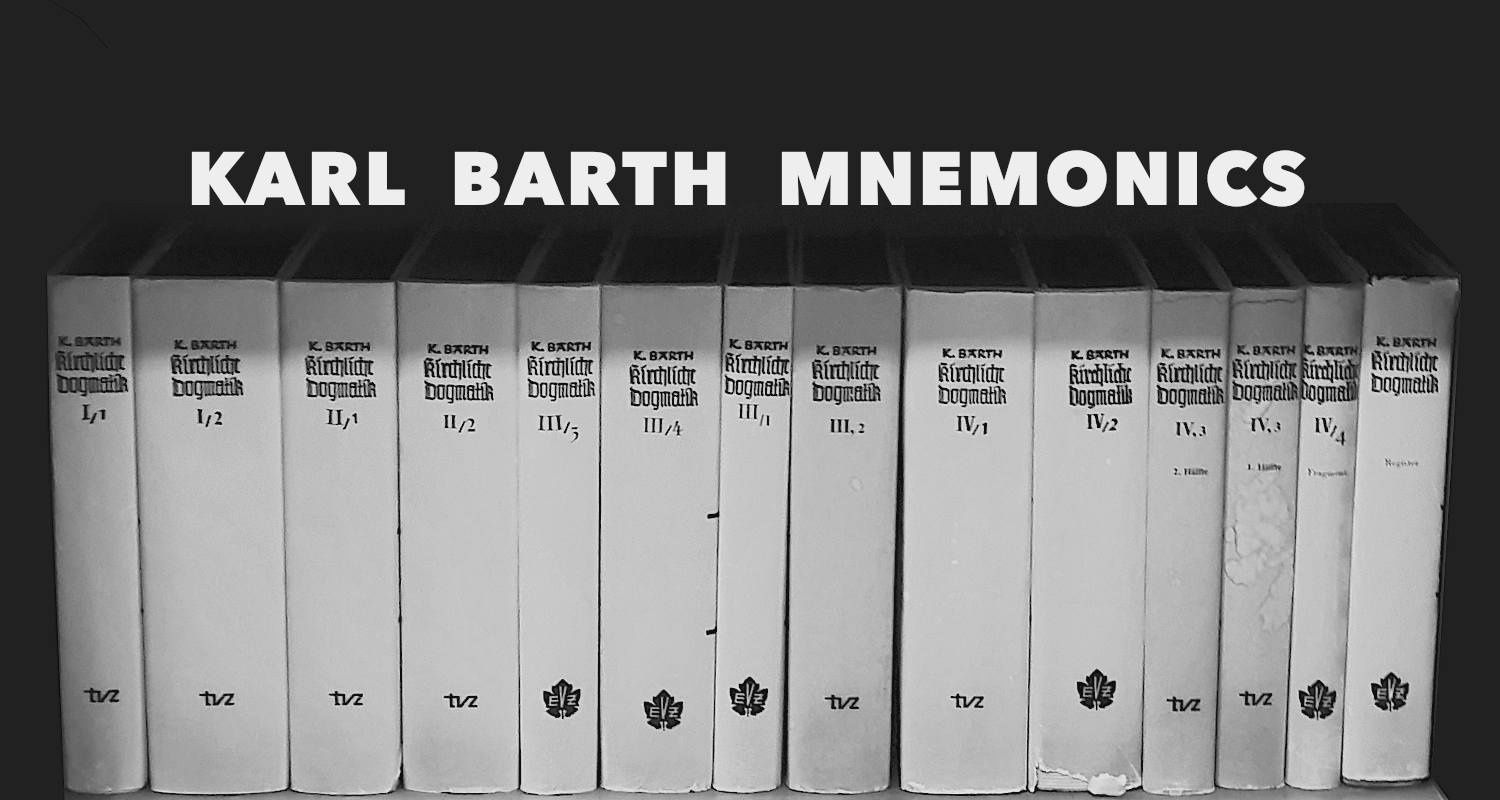
Although Karl Barth wrote many books, in order to fully engage Barth, the Church Dogmatics must be read first. Most people only engage Barth's Evangelical Theology, or possibly his commentary on Romans (Epistle to the Romans), but Barth wrote in the preface to the sixth edition of the commentary on Romans that he now realized that he'd have to rewrite the commentary and revising it would not be possible (paraphrase). Barth originally titled his Dogmatics, "Christian Dogmatics", but started the Dogmatics over after finishing the first volume (or second?) with his Church Dogmatics. I've read part of the first half volume of the Dogmatics called "The Word of God Vol1.1", and recently skipped ahead to Barth's "Doctrine of God" (Vol 2.1 and 2.2).Karl Barth's Doctine of God are Volume 2.1 and Volume 2.2 of his Church Dogmatics. I'm reading the older T&T Clark editions of the Church Dogmatics. Unfortunately, there are long sections of untranslated latin and greek quotations that make Barth's arguments difficult to follow without a translation. Barth writes a summary of what he believes in large print and immediately follows that summary with a long paragraph with the "fine print" full of latin and greek quotations from church fathers that justify what Barth had wrote in the summary. However, if you want to spend the money on the Church Dogmatic 31 Volume Study Edition, it has the translations inline. I am not made of money, so I was only able to purchase a used copy of The Doctrine of God (Volume 2.1 and 2.2). I've recently completed reading Volume 2.1, which is almost 700pages, but half the pages are in small print, so it reads more like a 1,000 page book. Now, I'm a hundred pages into Volume 2.2, and this second part is a hundred pages longer than the first volume.
Unlike most Systematic Theologies, Barth's Dogmatic places The Doctrine of God in the second two-part volume, following his two-part Volume 1 on the Word of God. This is characteristic of Barth's Christocentricism. I may talk about Barth's understanding of the Word of God another time. The Doctrine of God unfolds the ground work of the introductory Volume's 1.1 and 1.2, and begins the fullness of Barthianism that is unpacked in the rest of the 13 volumes.
Karl Barth is a Swiss Reformed Theologian, who wrote during and after World War II. He has been increasingly more famous since the Dogmatics were published. His writings directly engaged great theologians, and he is especially famous for his criticisms of Schleiermacher's "On the Christian Faith", which I read last year. However, his biggest critics of Barth are those close to my heart in the Reformed Community. A notable example are the followers of Cornelius Van Til, as well as Van Til's book, "Christianity and Barthianism".
Pages:
Recent Posts
- Søren Kierkegaard’s Practice in Theology
- A Short Life of Søren Kierkegaard
- Jonathan Edwards On Examining the Lord’s Supper
- Jonathan Edwards’ Letter to Deborah Hatheway
- Abraham Kuyper on Adam and Anthropology
- Herman Bavinck on Anselm’s Scholasticism.
- Anselm’s Cur Deus Homo and Satisfaction Atonement Theory
- Abraham Kuyper on Common Sense
- Criticisms of Anselm’s Ontological Argument
- Anselm of Canterbury’s Ontological Argument
- Geerhardus Vos and Biblical Astrology
- Stanley Grenz on Physics and Postmodernity
- Philip Melanchthon against Thomas Aquinas: Do the sacraments benefits others besides the recipients?
- Martin Luther and The Great Exchange
- Paul Tillich on Pantheism
- Abraham Kuyper’s Encyclopedia of Sacred Theology (Selections)
- Rudolf Bultmann: de-mythologizing, Gnosticism and his works
- Friedrich Schleiermacher’s On Religion: Speeches to Its Cultured Despisers
- Karl Barth’s “Protestant Theology in the Nineteenth Century”
- Valentin Ernst Löscher’s Thirteen Objections To Pietism
- Henry Chadwick
- Barth’s The Authority of the Word of God (CD I.2 §20.1)
- Church Dogmatics Vol I.2: The Doctrine of the Word of God by Karl Barth
- Tyndale: The Man Who Gave God an English Voice By David Teems (Review)
- Fyodor Dostoevsky (Christian Encounters Series) by Peter Leithart (review)
- Augustine’s "On Free Choice of the Will" (Review)
- Martin Luther’s "Bondage of the Will"
- Friedrich Schleiermacher’s "Der Christliche Glaube (The Christian Faith)"
- Martin Buber’s I and Thou
- Christ And Culture by H. Richard Niebuhr
- The Church by Hans Küng
- The Crucified God by Jürgen Moltmann
- Augustine of Hippo: A Biography (by Peter Brown)
- Francis Turretin’s Institutes of Elentic Theology
- "Narrative of Communion Controversy" by Jonathan Edwards
- Jonathan Edwards On God’s People Not In The Visible Church
- The Ecclesiastical Writings of Jonathan Edwards
- Karl Barth’s Doctrine of Election: Double Predestination in Jesus Christ
- Karl Barth: Doctrine of God Vol II.1
- Karl Barth’s Church Dogmatics
- Regeneration (παλιγγενεσία)
- Seven Important New Testament Uncial Codex Manuscripts
- John Calvin on Lent
- Top Ten Books That Have Influenced Me
- Ten Theologians That Have Influenced Me
- City of God by Augustine (Translated by Henry Bettenson)
- Q Document according to Calvin’s Harmony
- Calvin by Bruce Gordon
- Jonathan Edwards on Jephthah’s Vow (Judges 11)
- Benjamin Breckinridge Warfield
- Freedom of the Will by Jonathan Edwards
- John Calvin on the Resurrection of the Living
- Jonathn Edward’s Timeline for Revelation
- The Unity of the Bible by Daniel P Fuller (review)
- The Literal Meaning of Genesis Vol.1 (Review)
- Jonathan Edwards and Kevin DeYoung on Gideon’s Fleece
- The Gospel According to John (Review)
- The Mortification of Sin by John Owens (Review)
- Here I Stand, The Life of Martin Luther (Review)
- The Difficult Doctrine of the Love of God (Review)
- Religious Affections by Jonathan Edwards (Review)
- Genesis in Space and Time (Review)
- Second Thoughts on the Dead Sea Scrolls (Review)
- The Farewell Discourse and Final Prayer of Jesus
- Oscar Cullman on The Lord’s Supper
- Gospel and law: Contrast or continuum? (Review)
- The New Testament and Criticism (Review)
- The Future of Justification (Review)
- The Shack by William P. Young (Review)
- Resurrection of the Son of God by N.T. Wright (Review)
- Christ and Culture Revisited by D.A. Carson (Review)
- The Prodigal God by Timothy Keller (Review)
- Jonathan Edward’s Online!
- Jonathan Edward’s Blank Bible
- Bible Reading Plans and Study Bibles
- John Calvin, On Fasting
- Exegetical Fallacies by D.A. Carson (review)
- Learning New Testament Greek
- End Times Passages
- Paul’s Undisputed Letters
- Paul: In Fresh Perspective
- The Legacy of Sovereign Joy
- Calvin’s Institutes : Book I
- Levels of Happiness In Heaven
- Knowing God
- Commentary on the Book of Revelation
- Interior Castle (El Castillo Interior)
- Jonathan Edwards Biography
- Imprecatory Psalms
- "NT use of the OT" review
- Early Church Literature
- Institutes of the Christian Religion
- Biblical Archeology and Ancient Coins
- Who is this Jesus? Five Reasons Christianity is True
- Biblical Calligraphy
- Bible Commentaries
- 2 Baruch (Pseudepigrapha)
- Mcheyne Bible Reading Plan
- Gifts to Men
- Do not let God go except he bless us
Tags
Recent Comments
- Abraham Kuyper on Adam and Anthropology « houtz.tv on Abraham Kuyper’s Encyclopedia of Sacred Theology (Selections)
- Anselm of Canterbury’s Ontological Argument « houtz.tv on Jonathan Edward’s Discourse on the Trinity (mirror)
- Paul Tillich on Pantheism « houtz.tv on Karl Barth’s “Protestant Theology in the Nineteenth Century”
Archives
Wyatt Houtz
Seattle, WA USA
Pastor // Mars Hill Church
Computer Engineer // Expedia
Presbyterian // Reformed
Univ. of Michigan Alumnus
Blog RSS
Podcast RSS
Painting RSS
Photo Gallery RSS