

Abraham Kuyper’s Encyclopedia of Sacred Theology (Selections)
Abraham Kuyper's Encyclopedia of Sacred Theology: Its Principles is a large book that so-far-as-I-know has not been completely translated into English. Abraham Kuyper (1837-1920) is a famous Dutch Calvinist, who was Prime Minster (circa 1901-1905) of the Netherlands and wrote many books. Kuyper's most widely read book translated into English is his Lectures on Calvinism and a fairly recent popular reader Abraham Kuyper: A Centennial Reader. Kuyper is most import because he was able to implement Calvinist Theology in his Political Agenda in a synthesis rarely imitated, and in doing so, breaking ground and setting precedent towards implementing a Christian Government that we may pray comes to fruition in the future for all the World's States. (He's also an interesting character in the Two Kingdoms verse Federal Vision debates raging in your local Reformed Churches).
Top Ten Books That Have Influenced Me

(The top ten books that have influenced me the most by reading them in order of most influential to least influential.)
1. "Institutes of the Christian Religion" by John Calvin.
If you only read one book outside the bible in your entire life, this should be that book. This book has been the greatest influence upon me and is still the greatest influence. Many of the questions Calvin answers are particular to his own age, but the world is still coming to terms with the Reformation and the Summa Theologica of the Reformation is Calvin's Institutes. One note however, I only recommend the translation by Ford Lewis Battles that is edited by John T. McNeill. (Monergism has an updated release of this translation, but I have not seen it yet.)
It is through Calvin's Institutes that I was introduced to Calvin's Commentaries which are free online. The fullness of Calvin's thought comes to life in the Institutes when supplemented by these commentaries.
2. "City of God" by Augustine of Hippo
Augustine is the man whom all other theologians stand upon. So it is easy to take him for granted, but remembering that Calvin's Institutes is only a footnote the works of Augustine will show you his immense influence upon me, even if indirectly. I have been influenced by his Confessions, Enchiridion, and especially the treaties "On The Trinity" but the City of God is the magnum opus that unfolds Augustine's thought in a romantic and illuminating way. Augustine is a orator, so his works were written to be read, but the arguments are so simple and clear, that the depth of what he has written is not always realized until others attempt to criticize him.
I particularly recommend the translation by Henry Bettenson that is available in the Penguin Classics series as a very cheap paperback.
3. "Freedom of the Will" by Jonathan Edwards
Jonathan Edwards was introduced to me through John Piper, and Edwards is a close second to John Calvin in his overall influence upon my understanding of theology. If there is anyone's opinion who can stand up to John Calvin, it is Jonathan Edwards. All 73 volumes of Edwards works are available online for free at Yale's Jonathan Edwards Center. There are many books I've read by Edwards, however the Freedom of the Will is the clearest and easiest to read, and is the apex book on Double Predestination. Anyone who disagrees with predestination will have to engage this masterpiece.
Although this is the most influential book by Edwards, there is an Unpublished Essay on the Trinity that has influenced me far more than anything else Edwards has written. This archive includes Freedom of the Will, and also Edward's Blank Bible, which I use all the time.
Edward's Religious Affections was a close second place. The Nature of True Virtue and many of his sermon readers are notable as well.
4. "Biblical Doctrines" by B.B. Warfield.
On the heals of Calvin and Edwards is B.B. Warfield. I am actually most influenced today by Warfield's "Calvin and Calvinism" but it is out of print. I was introduced to B.B. Warfield when I found several of his books at a used book store for a few dollars each. The first I read was the "Inspiration and Authority of the Bible" and I was impressed by how scholarly and evident Warfield argued his points, which was far better than any theology book I had ever read. However, it was very hard for me to choose which one of his books most influenced me, that is also easily available to purchase. So I have chosen Biblical Doctrines, which covers topics between "Calvin and Calvinism" to "Inspiration and Authority of the Bible".
If you would like to be introduced to Warfield, I suggest starting with "Biblical Doctrines" instead and then read "Studies in Theology" after that before "Inspiration and Authority of the Bible".
5. "Jesus and the Victory of God" by N.T. Wright
N.T. Wright is influential in a different way than the previous three books. I would prefer to list the entire three volume "Christian Origins and the Question of God" series, but this is well over 1500pages, so I have chosen volume two as the most influential book, but volume three, "The Resurrection of the Son of God" (RSG), is a close second. The supreme value of N.T. Wright is his willingness to engage critical and liberal scholars and although many reformed theologians do not think he is conservative (or reformed enough), the overall value Wright adds is far beyond what he lacks. (N.T. Wright may challenge my suggestion that he lacks anything). The value of "Jesus and the Victory of God" (JVG) is that it is a productive look at the humanity of Christ which is often overshadowed by Christ's divine nature in reformed scholasticism.
The RSG is also a magnum opus of its own right, with an impressive bibliography, its hard to understand how this book was written in a man's lifetime.
N.T. Wright is most well known for his views in the New Perspective on Paul however, the first three volumes do not address this topic in depth, and I expect this to be discussed in the forth coming volume 4: "Paul and the Faithfulness of God". This is a six volume series but only the first three have been completed. The last two expected are on the four evangulists and a summary respectively. I've read many of Wright's shorter volumes on Paul, and highly recommend them as well, but it was JVG that introduced me to all the material on the Quest for the Historical Jesus. And as Wright said, the Reformation was the true first quest.
6. "The Difficult Doctrine of the Love of God" by D.A. Carson
Carson has influenced me tremendously through online podcasts articles, and conferences. I have read several of this books, but this short title is supremely valuable for understanding theodicy in a reformed perspective. D.A. Carson's "Commentary on the Gospel of John" is an amazing work, but commentaries are not quite what I wish to discuss in this article. I may give another top ten on technical books or commentaries someday.
7. "The Death of Death in the Death of Christ: A Treatise in Which the Whole Controversy about Universal Redemption is Fully Discussed" by John Owen
"Death of Death" would have influenced me far more if I had had read it years ago. It is a definitive polemic on the "L" of the TULIP that is "Limited Atonement". John Owen has been popularized by Justin Taylor, and you may read many of John Owen's works online for free..
Another book by Owen that is excellent is his "Mortification of Sin." I highly recommend it as well.
8. "The Francis A. Schaeffer Trilogy: Three Essential Books in One Volume: The God Who Is There; Escape from Reason; He Is There and He Is Not Silent" by Francis Schaeffer
Schaeffer's Trilogy is an excellent introduction to engaging modernism and culture and understanding how worldviews have changed over the last two hundred years. This book was an invaluable introduction to many of the authors covered and I highly recommend him.
9. "A Theology of the New Testament" by G.E. Ladd
I am not so much influenced by Ladd as I once was, but for someone who has never read much theology beyond Christian Living, this is a great introduction to some amazing ideas. Much of this book was driven by answering Rudolf Bultmann's "Theology of the New Testament" and Ladd provides answers to Bultmann's demythologizing.
10. "Desiring God: Meditations of a Christian Hedonist" by John Piper
I had a hard time choosing "Desiring God" because I enjoyed Piper's "The Pleasures of God: Meditiations on God's Delight in Being God" much more. However, it was "Desiring God" that introduced me to everything I now love, so I am greatly indebted to the seeds this book sewed.
Honorable Mention: "Mere Christianity" by C.S. Lewis
It's been about a decade since I first read this book, but it was influential as a bridge from Christian Radio and Christian Living books into the meat of theology. Lewis has many aberrant theological views, but some of his arguments are ingenious. This is a must read for anyone starting out in theology, however many people today struggle with his ideas.
Notable References:
- D. Martin-Llyod Jones, "Studies in the Sermons on the Mount"
- Eusebius, "Church History"
- Karl Rahner, "Trinity"
- Schleiermacher, "On The Christian Faith"
- Martin Luther's "Three Treaties: Babylon Captivity of the Church; Letter to the German Nobility; and 95 Thesis"
There are many great books that I've read which are not on this list, because these books are ones that have influenced me the most, and influence is a subjective metric, even to the point of saying tomorrow could produce a different list.
Benjamin Breckinridge Warfield
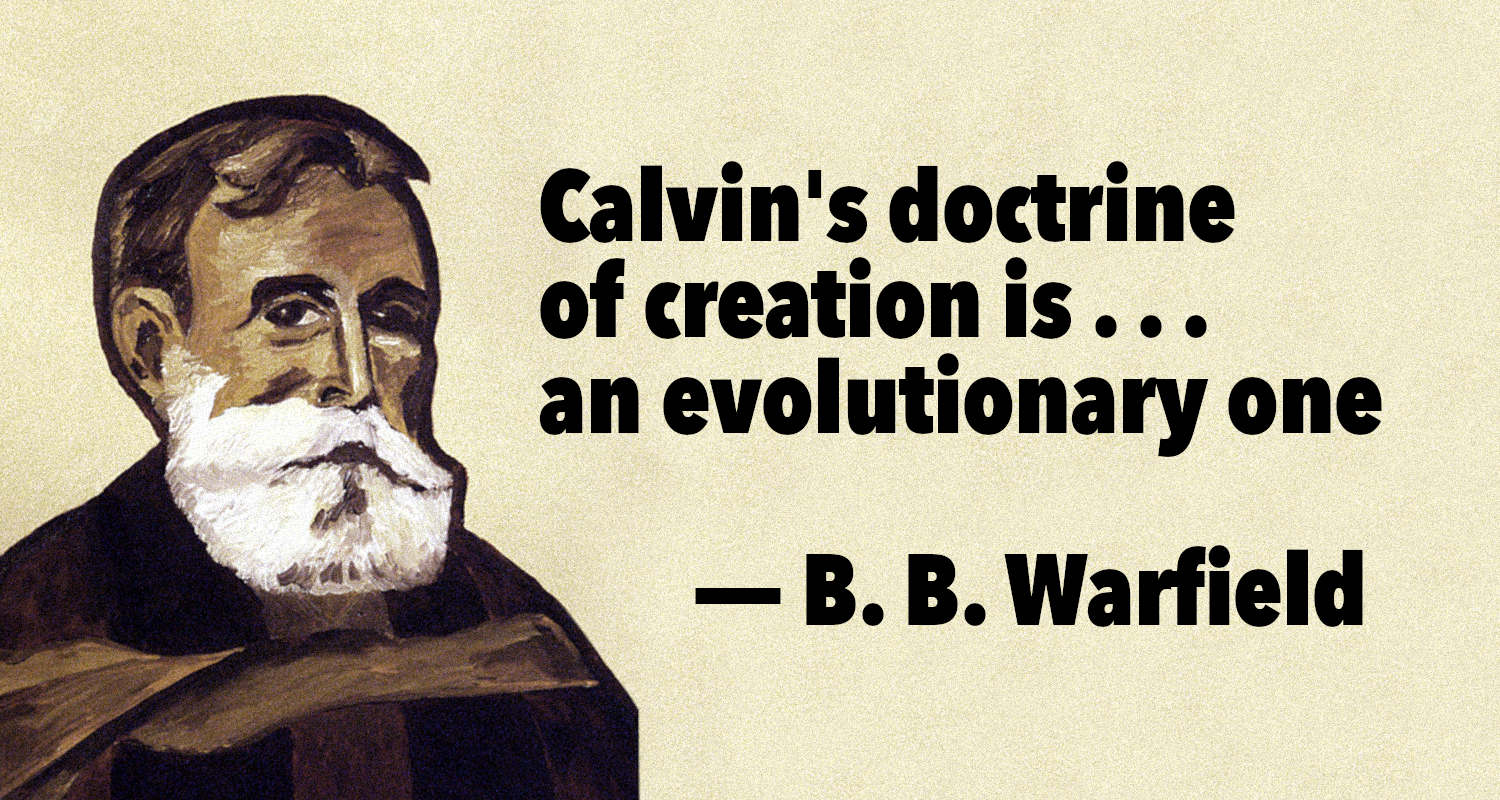
Benjamin Breckinridge Warfield (1851 - 1921) or commonly known as B. B. Warfield was an amazing American Presbyterian minister and prolific writer that you need to get to know better. I found four volumes of B. B. Warfield's "works" at half price books for $3 each, which is amazing deal. (Half Price Books apparently doesn't account for inflation, because these books were printed in 1948 and sold new for only $7). B.B. Warfield is particularly known for his defense of the Inspiration of the Bible, and for the scholasticism of his books. D. A. Carson complemented Warfield by saying that Warfield never said anything wrong (my paraphrase). Unfortunately, most people today latch onto a few statements that Warfield said that seems to support Darwinian evolution, but are usually out of context or against other things Warfield has wrote. "Inspiration and Authority of Bible" by B.B. Warfield is a behemoth. I believe that a layperson could read the first half of the book but unless you have a basic understand of the Koine Greek language (biblical greek), Latin, some Hebrew, and a little background in Greek Philosophers, as well as Philo and some Judaisim, the second half of this book will be impossible to read. There are many untranslated paragraphs in Latin and Greek that I stared at for a long time just try to understand what Warfield was talking about. It was an amazing book overall, and by the last page, my respect for Warfield shot through the roof.
"Inspiration and Authority of Bible" divides revelation into three categories: Theophanies, Dreams & Visions, and Conscription. Warfield says that all three times of revelation occur throughout the entirety of the bible, but the age of the patriarchs were dominated by Theophanies, or appearances of God to Man. During the age of the prophets, dreams and visions were the primary way that God provided revelation to man, and then conscription was during the apostolic age, which included typologies and the use of the Old Testament by the Apostles. Warfield notes that the holiness of the man has no influence on the importancy of the prophecy. Something is not more important because Moses said it rather than Zephaniah, because ultimately it is not the man but God who has spoken both things, so we should not error by favoring Moses because he provided more numerous prophecies. This is also extremely relevant to church creeds and councils, but their publications are the result of man's deductions and not from God's direct revelation according to the three ways I listed: Theophanies, Dreams & Visions or Conscriptions.
In the second half of "Inspiration and Authority of Bible", Warfield goes to great lengths to demonstrate that Theopneustos in 2 Timothy 3:16 was correctly translated as of divine origin rather than spirit-filled, and the doctrine of biblical inspiration was held by all the apostles and Christ himself, and is not a new invention by fundamentalists. 2 Peter 1:20 is also discussed at great length.
2 Peter 1:20 knowing this first of all, that no prophecy of Scripture comes from someone's own interpretation.2 Timothy 3:16 All Scripture is breathed out by God and profitable for teaching, for reproof, for correction, and for training in righteousness,
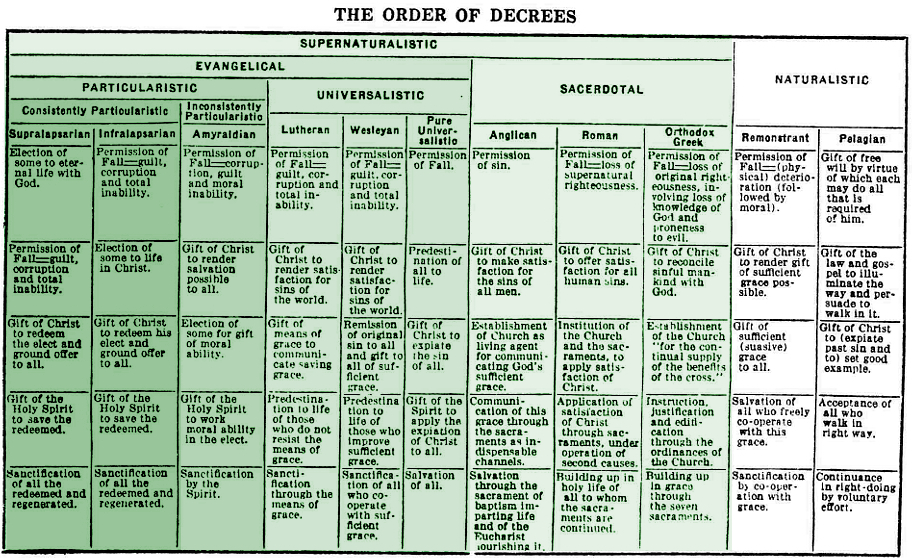
The other three books that I purchased are "Calvin and Augustine," "Perfectionism," and "The Plan of Salvation." I will probably read "The Plan of Salvation" next, because it is a shorter book that critiques different views on how salvation is obtained in different Christian denominations, ie. Calvinism, Catholicism, Orthodox, etc. I'm looking forward to it.
Friedrich Schleiermacher's
Blog RSS
Podcast RSS
Painting RSS
Photo Gallery RSS